
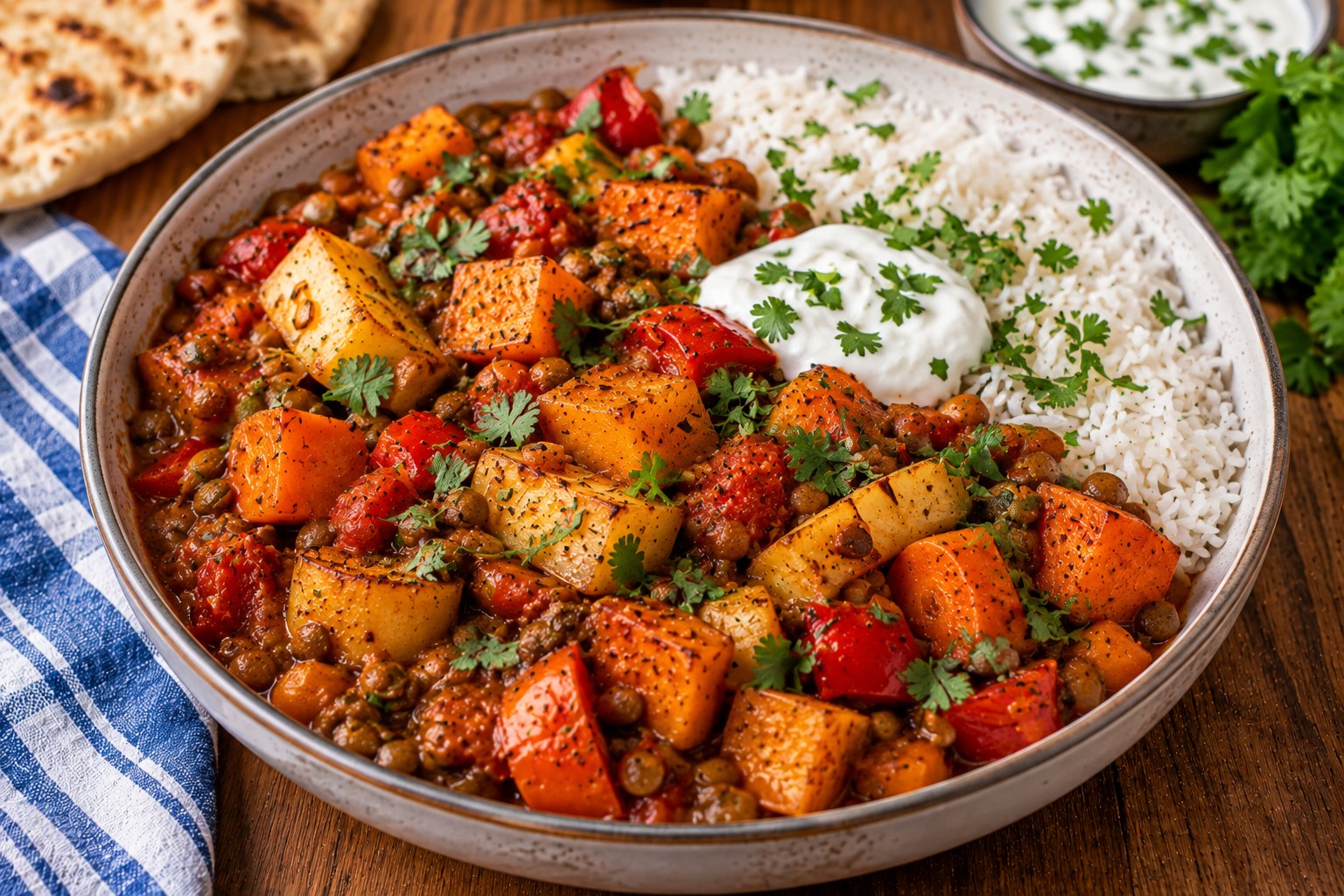
A good vegetable curry doesn’t need an expensive jar of sauce or a long list of ingredients. This roasted vegetable and lentil curry brings together sweet potatoes, carrots, parsnips and peppers in a gently spiced tomato sauce, with green lentils adding texture and making the meal more substantial.
Roasting the root vegetables first is what makes this recipe special. Their edges turn lightly golden, bringing out their natural sweetness before they’re folded into the warm curry sauce.
Made with familiar UK supermarket ingredients, this comforting meat-free dinner is ideal for colder evenings, using up seasonal vegetables and planning affordable family meals.
Why This Roasted Vegetable Curry Works
- Roasting gives everyday vegetables extra flavour.
- Tinned lentils save soaking and lengthy preparation.
- The tomato-based sauce uses simple cupboard ingredients.
- It’s easy to adapt with seasonal vegetables.
- Leftovers can be saved for another meal.
Recipe at a Glance
| Details | Information |
|---|---|
| Servings | Approximately 4 generous portions |
| Preparation time | 15 minutes |
| Cooking time | 50–55 minutes |
| Total time | Approximately 1 hour 10 minutes |
| Course | Main meal |
| Cooking method | Oven and hob |
| Dietary information | Vegan without the optional dairy yoghurt, provided the stock is suitable |
Ingredients
For the Roasted Vegetables
- 400g carrots, cut into bite-sized pieces
- 400g parsnips, cut into bite-sized pieces
- 2 medium sweet potatoes, peeled and cubed
- 2 peppers, deseeded and chopped
- 1 tbsp vegetable oil
- 1 tsp cumin seeds
- 1 tsp garam masala
For the Lentil Curry Sauce
- 1 × 400g tin green lentils, drained and rinsed
- 1 × 400g tin chopped tomatoes
- 200ml vegetable stock
- 1 tbsp mild curry powder
Optional Garnish
- Fresh coriander
- A spoonful of natural yoghurt or a suitable plant-based alternative
Choosing Your Ingredients
Root vegetables: Carrots, parsnips and sweet potatoes develop a lovely sweetness when roasted. Cut them into similar-sized pieces to encourage even cooking.
Peppers: Add these later because they soften more quickly than the root vegetables.
Green lentils: Tinned lentils are already cooked, so they only need heating through in the sauce. They also help make the dish filling without meat.
Curry powder: A mild blend makes this suitable for households that prefer gentle spices. Adjust the amount to your family’s taste.
Vegetable stock: Choose a lower-salt option if preferred, and check that it’s suitable for vegan diets when necessary.
How to Make Roasted Vegetable and Lentil Curry
Step 1: Preheat the Oven
Heat your oven to 220°C (200°C fan).
Prepare one or two large roasting trays. Giving the vegetables enough space helps them brown rather than steam.
Step 2: Season the Root Vegetables
Place the chopped carrots, parsnips and sweet potatoes in a large bowl.
Add the vegetable oil, cumin seeds and garam masala. Toss until the pieces are lightly coated.
Spread the vegetables across the roasting trays in a single layer.
Step 3: Roast Until Lightly Golden
Roast for 25 minutes, turning the vegetables once if needed.
Add the chopped peppers and return the trays to the oven for another 15–20 minutes.
The vegetables should be tender when pierced with a fork, with some lightly browned edges.
Step 4: Prepare the Curry Sauce
While the vegetables finish roasting, place the chopped tomatoes, vegetable stock and mild curry powder in a large saucepan.
Bring to a gentle simmer and stir until combined.
Let the sauce bubble gently for approximately five minutes so the flavours begin to develop.
Step 5: Add the Lentils and Roasted Vegetables
Stir the drained green lentils into the tomato sauce.
Carefully add the roasted vegetables and fold everything together.
Simmer gently for 8–10 minutes, allowing the lentils to heat through and the vegetables to absorb some of the sauce.
If the curry becomes too thick, add a small splash of hot water.
Step 6: Finish and Serve
Taste the curry and adjust the seasoning if necessary.
Sprinkle with fresh coriander or add a spoonful of yoghurt, if desired.
Serve warm with rice, flatbreads or your preferred accompaniment.
Why Roasting Makes a Difference
Boiling vegetables directly in curry sauce produces a softer, more uniform result. Roasting creates lightly caramelised edges and concentrates their flavour before they enter the sauce.
The natural sweetness of parsnips, carrots and sweet potatoes also balances the acidity of the tomatoes and complements the warm spices.
For the best result, avoid overcrowding the roasting tray and cut the vegetables into reasonably even pieces.
Budget-Friendly Vegetable Swaps
This curry is especially useful when you have vegetables that need using before your next supermarket shop.
You can replace some of the sweet potato with butternut squash or use cauliflower instead of peppers.
Frozen vegetables are another option, although they may release additional moisture during roasting.
If using dried lentils instead of tinned, cook them separately according to their packet instructions before adding them to the sauce. Do not add uncooked dried lentils directly at the final stage.
What to Serve with Lentil Curry
The curry is substantial enough to be the centre of a family dinner. Try serving it with:
- Fluffy basmati rice.
- Warm flatbreads.
- A simple cucumber salad.
- Natural or plant-based yoghurt.
- Fresh coriander and a squeeze of lemon, if available.
For a budget-conscious meal, choose an accompaniment you already have rather than buying extra ingredients unnecessarily.
Make Ahead, Storage and Reheating
You can prepare the roasted vegetables in advance and keep them refrigerated until you’re ready to finish the sauce.
Allow cooked leftovers to cool promptly and refrigerate within two hours. Eat within 48 hours.
Reheat until steaming hot throughout. Add a splash of water if the sauce has thickened during storage, and avoid reheating the same portion repeatedly.
If serving with rice, follow the separate food safety guidance for cooked rice.
Frequently Asked Questions
Can I make this lentil curry vegan?
Yes. The curry itself is plant-based when prepared with suitable vegetable stock. Omit the dairy yoghurt or use a plant-based alternative.
Can I use red lentils instead of green lentils?
Yes, but the texture will change. Dried red lentils break down more readily and need additional cooking liquid and time. Cook them separately or adjust the recipe accordingly.
Can I use frozen vegetables?
Yes. Roast them according to their size and moisture content. They may need a little longer to develop browned edges.
Is this curry spicy?
The recipe uses mild curry powder and warming spices rather than chilli. The finished heat depends on your chosen curry powder.
Can I make this recipe ahead?
Yes. Prepare the curry, cool it promptly and refrigerate. Reheat thoroughly before serving.
Why is my vegetable curry watery?
Vegetables can release moisture, especially if they’re crowded during roasting or cooked from frozen. Simmer the finished sauce uncovered for a few minutes to reduce excess liquid.
Explore More Affordable Meat-Free Dinners
Looking for more practical meals made with everyday ingredients? Visit our Budget Family Meals UK guide for affordable dinner inspiration.
You can also organise your weekly menu and shopping list with our Free UK Family Meal Planner.